
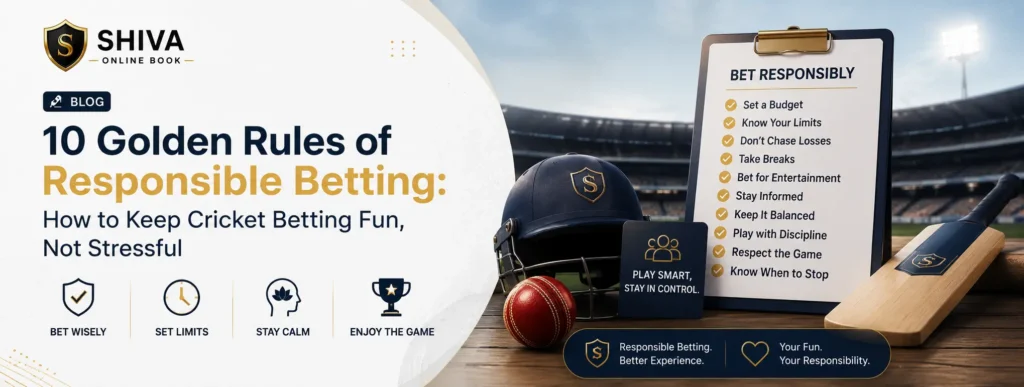
A final-over chase can make even a quiet cricket fan sit on the edge of their seat. Add a wager, and every boundary, wicket, or dropped catch may feel more intense. That extra excitement is precisely why clear boundaries matter. Cricket is unpredictable: weather changes, pitch deterioration, injuries, tactical decisions, and one exceptional over can transform a match.
Responsible betting does not mean finding a guaranteed winning strategy-none exists. It means protecting your money, time, relationships, and enjoyment of the sport. Whether you occasionally wager on an international match or follow a domestic tournament, the following rules can help keep cricket betting in its proper place: an optional form of paid entertainment, never a financial plan or emotional escape.
Key Takeaways
- Decide your spending and time limits before the match.
- Never borrow money or use funds reserved for essentials.
- Do not chase losses or bet while emotional.
- Understand that cricket knowledge cannot remove uncertainty.
- Take a break and seek support when betting stops feeling enjoyable.
What Does Responsible Betting Mean?
Responsible betting means making informed, voluntary decisions within limits that do not harm your finances or wellbeing. It includes understanding the risks, accepting that losses are possible, monitoring your behavior, and knowing when to stop. Safe gambling practices reduce risk, but they cannot make sports betting risk-free. If wagering is already causing distress, debt, secrecy, or conflict, tighter limits may not be enough. Stopping and seeking support may be the safer response.Golden Rule 1: Treat Betting as Entertainment, Not Income
A cricket wager should be viewed like paying for a match ticket or another leisure activity: the money spent may not return. Do not include expected winnings in your household budget or rely on betting to cover bills, debt, travel, or other goals. Before placing a wager, ask: “Would I still be financially secure if I lost this entire amount?” If the answer is no, do not bet. Even strong cricket knowledge cannot turn an uncertain event into dependable income.Golden Rule 2: Create a Firm Betting Budget
Set a fixed entertainment budget only after accounting for housing, food, utilities, transport, savings, and debt payments. This amount should be affordable to lose completely without changing your plans. Write the limit down and choose a clear period, such as a week or month. Track every stake and result, including small live bets that are easy to forget. When the budget is used, stop. A win is not permission to increase the next period’s limit, and a loss is not a reason to refill it.Golden Rule 3: Set a Time Limit as Well as a Money Limit
Responsible cricket betting is not only about cash. A Test match can last five days, while a tournament may produce matches almost every evening. Constantly checking scores, odds, or team news can consume attention and disrupt sleep. Choose in advance when you will engage and when you will log off. For example, you might allow a short period before the toss and avoid monitoring betting markets during work or family time. Use alarms or device limits, and take regular screen-free breaks.Golden Rule 4: Never Chase Losses
Chasing losses means placing more or larger wagers to recover money already lost. It is one of the clearest warning signs of problem gambling. Imagine losing a pre-match wager and immediately increasing your stake during the second innings because a batter has started quickly. That reaction is driven by the previous loss not by a new financial allowance. Treat lost money as gone, end the session, and step away for at least the rest of the match. The next delivery does not “owe” you a win.Golden Rule 5: Recognize Emotional Triggers and Tilt
“Tilt” describes a state in which frustration or excitement leads to impulsive, poorly controlled decisions. In cricket betting, it may follow a last-ball defeat, a controversial umpiring decision, or a dropped catch that changes the result. Other triggers include stress, boredom, loneliness, alcohol, and fear of missing out during a dramatic chase. Create a personal stop rule: no betting when angry, upset, intoxicated, sleep-deprived, or desperate to change your mood. Pause, leave the screen, take a walk, or speak with someone you trust.Golden Rule 6: Understand Odds, Uncertainty, and Mental Shortcuts
Odds represent an implied assessment of probability; they are not a promise. Cricket remains uncertain even when one team appears stronger. Watch for the gambler’s fallacy, the mistaken belief that a result is “due” because the opposite has happened repeatedly. Five unsuccessful wagers do not make the sixth more likely to win. Also avoid confirmation bias: noticing statistics that support your preferred team while ignoring injuries, conditions, or contrary evidence. If you do not understand a market or its rules, do not enter it.Golden Rule 7: Be Especially Careful With Live Betting
Live betting allows wagers after a match begins. Its speed can shorten reflection time and encourage repeated decisions based on a single over, wicket, or boundary. Do not interpret every momentum swing as an opportunity. Before the match, decide whether you will use live markets at all. If you do, include them within the same original budget, set a maximum number of wagers, and introduce a waiting period before confirming any decision. Never increase stakes simply because the match feels urgent.Golden Rule 8: Keep Cricket Enjoyable Without a Wager
You should be able to enjoy a cover drive, tactical field change, or tense final over without needing money on the outcome. Regularly watch matches with no wager at all. Maintain other hobbies and protect time for relationships, exercise, work, and rest. Notice if you are skipping matches that cannot be wagered on or caring more about a bet than the cricket itself. That shift may indicate that betting is replacing fandom rather than complementing it.Golden Rule 9: Review Your Behavior Honestly
Conduct a short monthly check-in. Review the total money and time spent, not only memorable wins. Ask whether you have hidden activity, exceeded limits, borrowed money, lost sleep, felt irritable, or tried unsuccessfully to cut back. Invite a trusted person to help you stay accountable if appropriate. Warning signs deserve action, not shame. Use cooling-off tools, payment controls, blocking software, or a complete break. If you repeatedly break your own rules, consider self-exclusion, which formally restricts access to gambling for a defined period.Golden Rule 10: Know When to Stop and Ask for Help
Stop immediately if sports betting is causing financial pressure, anxiety, secrecy, relationship conflict, or problems at work or study. You do not need to wait for a crisis or receive a diagnosis before asking for help. Remove access to betting, protect essential funds, and tell someone you trust. A qualified counselor or gambling-support service can help you understand your options confidentially. Seeking assistance is not an admission of failure; it is a practical step toward regaining stability and enjoying cricket without stress.A Simple Match-Day Safety Check
Before betting, ask yourself:- Have I already paid for essentials?
- Is this amount inside my written entertainment budget?
- Am I calm, sober, and comfortable losing it?
- Have I set an end time?
- Would I still watch and enjoy this match without a wager?